
I want to share with you a couple of posters I designed based on my experience teaching chess to children in primary schools. During lessons, I have often noticed that children may understand an idea when we discuss it together, but find it difficult to remember and apply it once they start playing. A clear visual prompt gives them something they can return to, helping them to reflect and apply what they have learned.
These posters work together as a small collection covering three connected areas: thinking skills, emotional development and social learning. Although each poster has a main focus, several develop more than one area. Together, they show how Chess in Education can support the development of the whole child. We aim to teach children to think carefully, understand their emotions and interact respectfully with others. As educators, we have to reinforce these ideas again and again in the classroom.
The clue is on the wall
The posters reflect the support I have found children need most in the classroom. They provide a simple visual reference, make important ideas visible and give children something concrete to return to.
Posters can reinforce positive habits, classroom values and chess knowledge
Use these posters actively to provide cognitive, emotional and social scaffolding. With regular use, gradually, children begin to internalise them and take greater responsibility for their thinking, emotions and behaviour. You can use them during demonstrations, refer to them during play or choose one prompt to guide behaviour and discussion. The goal is to help children reflect on how they think, feel and interact with others.
These posters also work well in mixed-ability classrooms, where children have different levels of chess experience, confidence and language development. The posters provide a shared reference point while allowing each child to access the support at their own level.
As educators, it is our responsibility to create activities, conversations and moments of reflection that make this wider learning possible.
Use them as ideas to create your own or download them to display. They are all created in A/3 format.
Thinking Skills
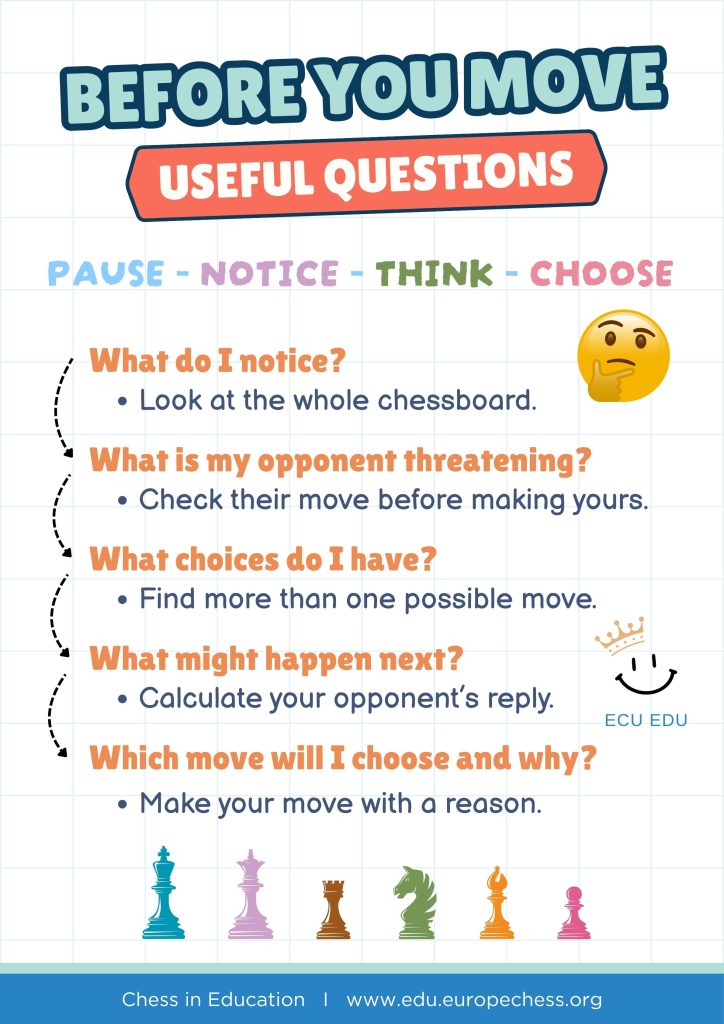
The teaching objective of the “Before You Move → Useful Questions” poster is to give children a simple and repeatable decision-making routine. Instead of telling children to “Think before you move”, the poster shows them what this actually means.
Model the routine!
Set up a simple position and think aloud as you work through the questions. Show children how one question leads naturally to the next. Keep the position simple enough for them to follow the reasoning.
Thinking Skills
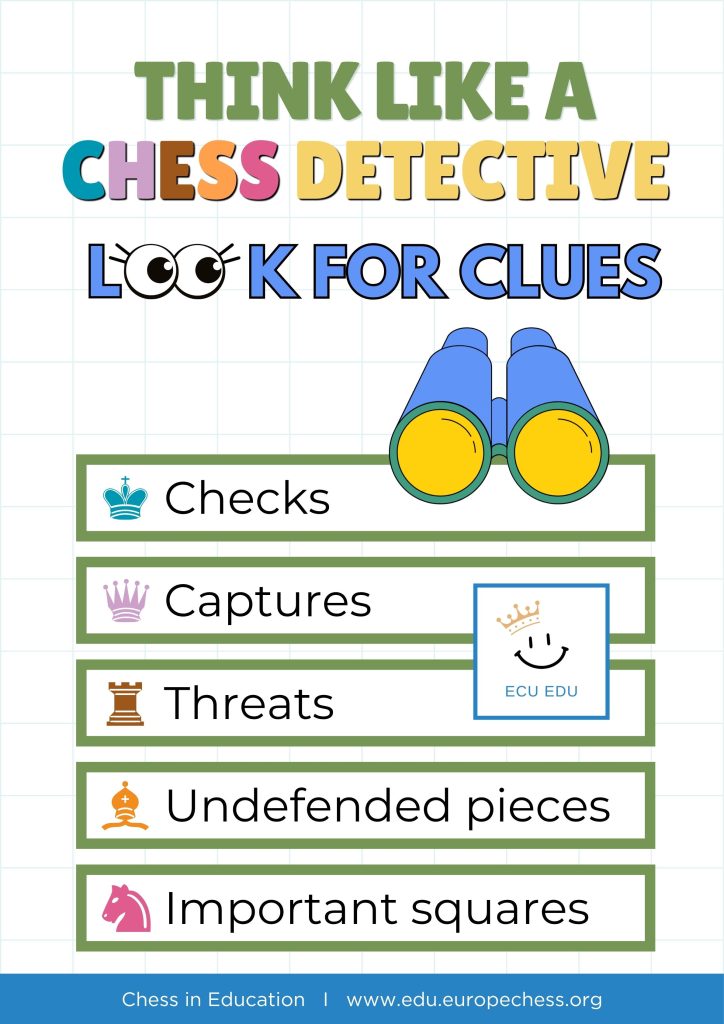
The teaching objective of the “Think Like a Chess Detective” poster is to establish a consistent board-scanning routine. It gives children a clear sequence of clues to investigate before they move. The poster helps to develop structured thinking and serves as cognitive scaffolding.
Model the detective questions!
Then children will use the visual reminder, and eventually they begin investigating independently. The wider objective is to develop attention, observation, prediction, reasoning and impulse control. Children learn not to move immediately, as they first need to collect information in order to make a good move.
Thinking Skills & Emotional Development
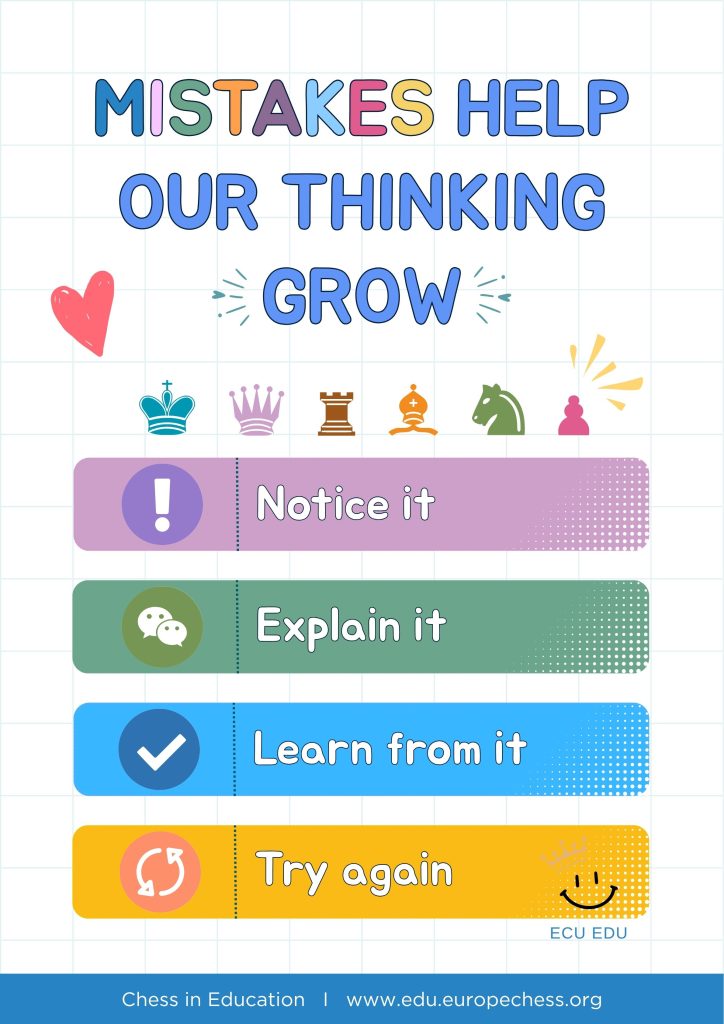
The teaching objective of the “Mistakes help our thinking grow” poster is to create a classroom culture in which mistakes are treated as useful information.
The poster gives children a simple reflection cycle: Notice it → Explain it → Learn from it → Try again, which aims to develop metacognition by helping children to reflect on their own thinking process while also develops resilience, perseverance, adaptability and growth mindset.
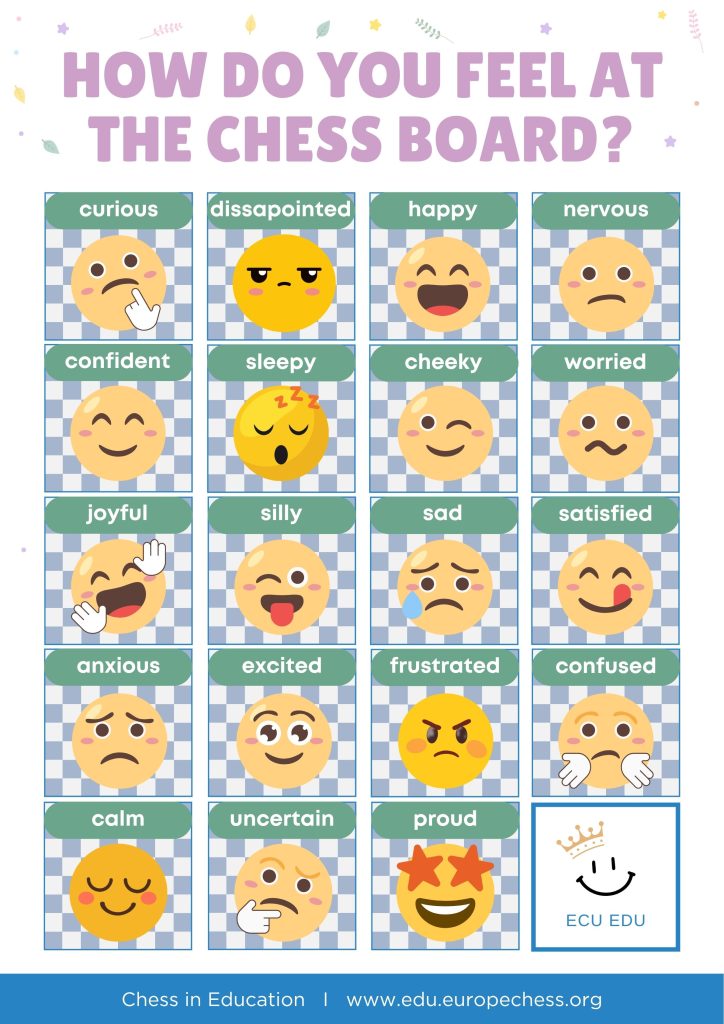
Emotional Development
The objective of the “How Do You Feel at the Chess Board?” poster is to help children recognise, name and communicate the feelings they experience while playing chess. It builds emotional vocabulary and self-awareness while showing children that feelings such as uncertainty, frustration or disappointment are a normal part of learning.
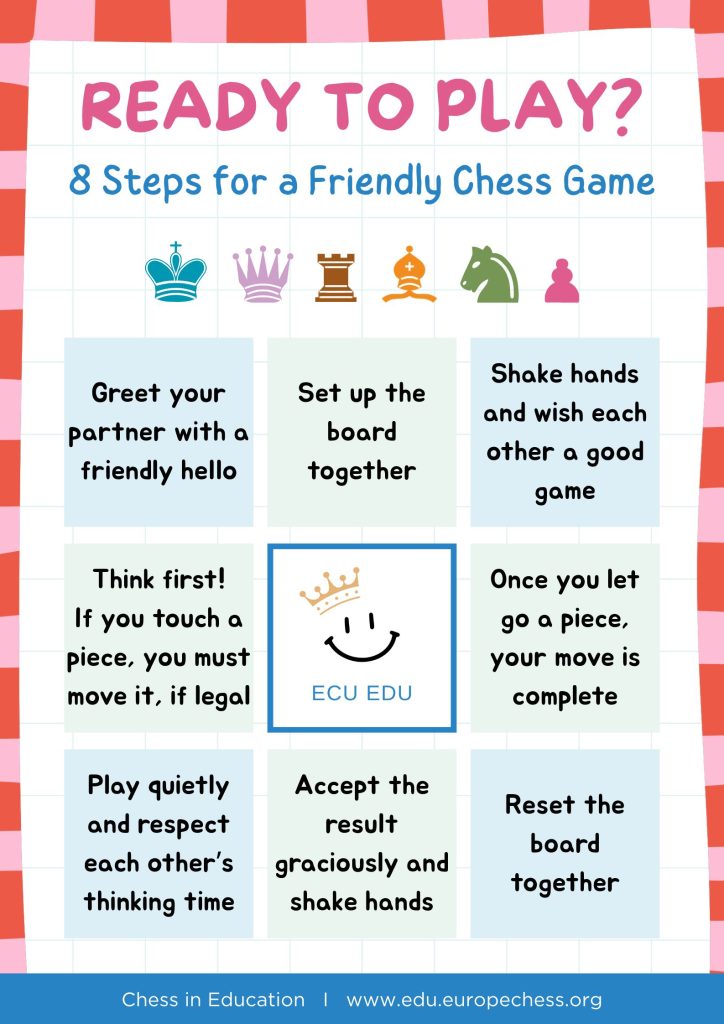
Thinking Skills & Social, Emotional Learning (SEL)
The teaching objective of the “8 Steps for a Friendly Chess Game” is to establish a clear and consistent routine for playing chess in the classroom.
It supports classroom management and helps children develop independence, respectful behaviour and a shared sense of responsibility.
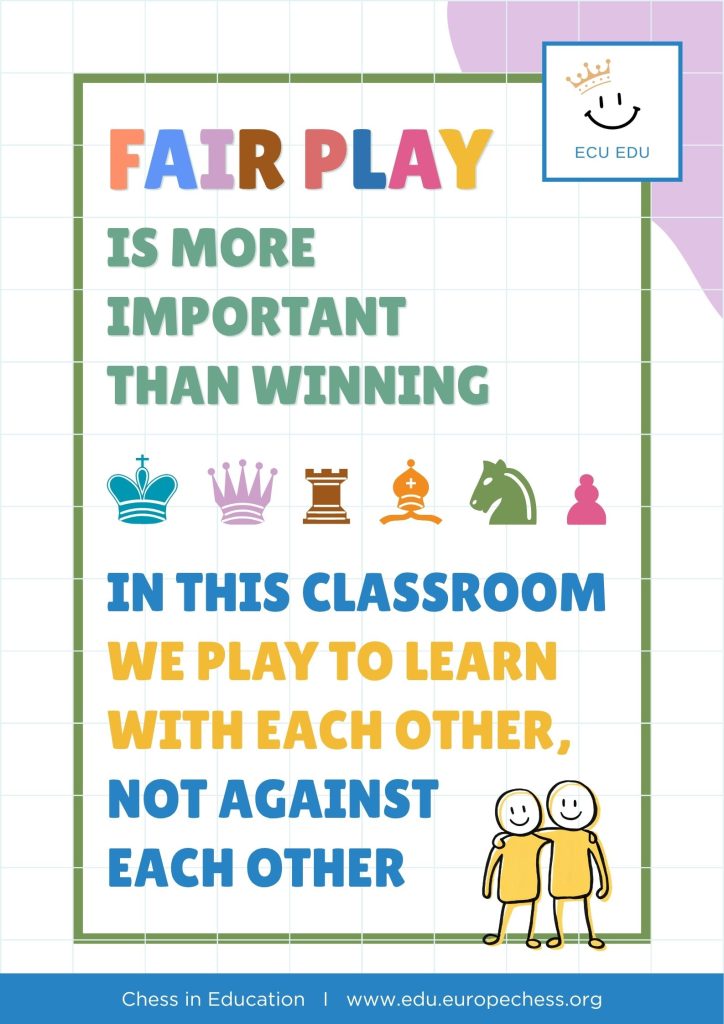
Social, Emotional Learning (SEL)
The teaching objective of the “Fair Play” poster is to establish fair play as a central classroom value.
We, educators, have to emphasise that the deeper purpose of classroom play is to learn together, learn with and from each other and see that learning is a shared experience.
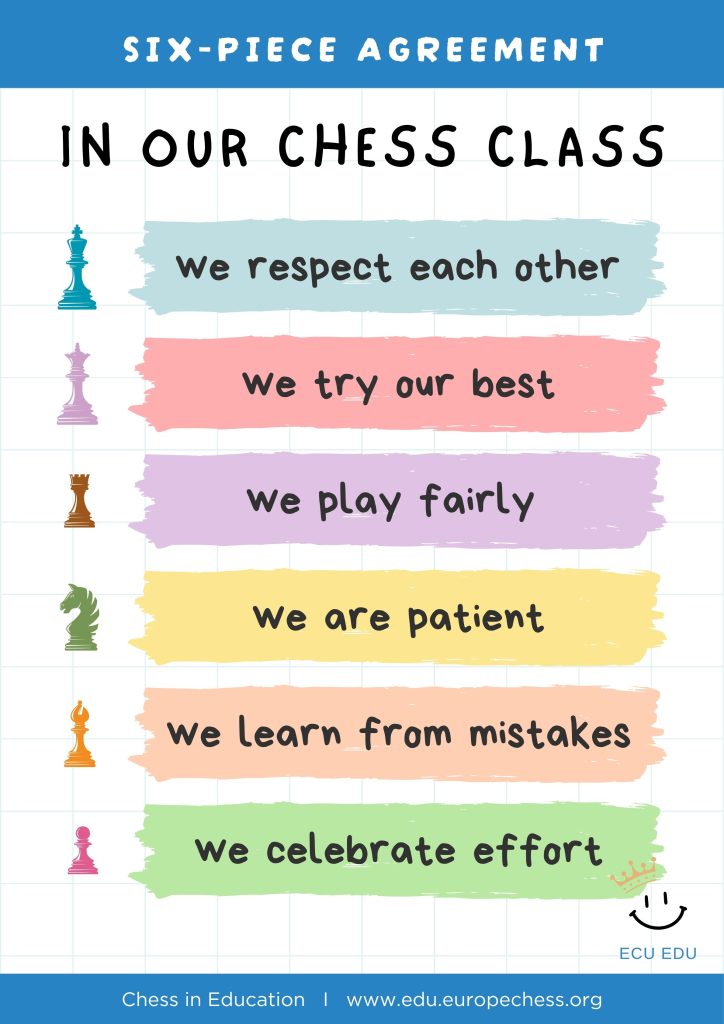
Social, Emotional Learning (SEL)
More ideas on how to create this poster together with the children read here
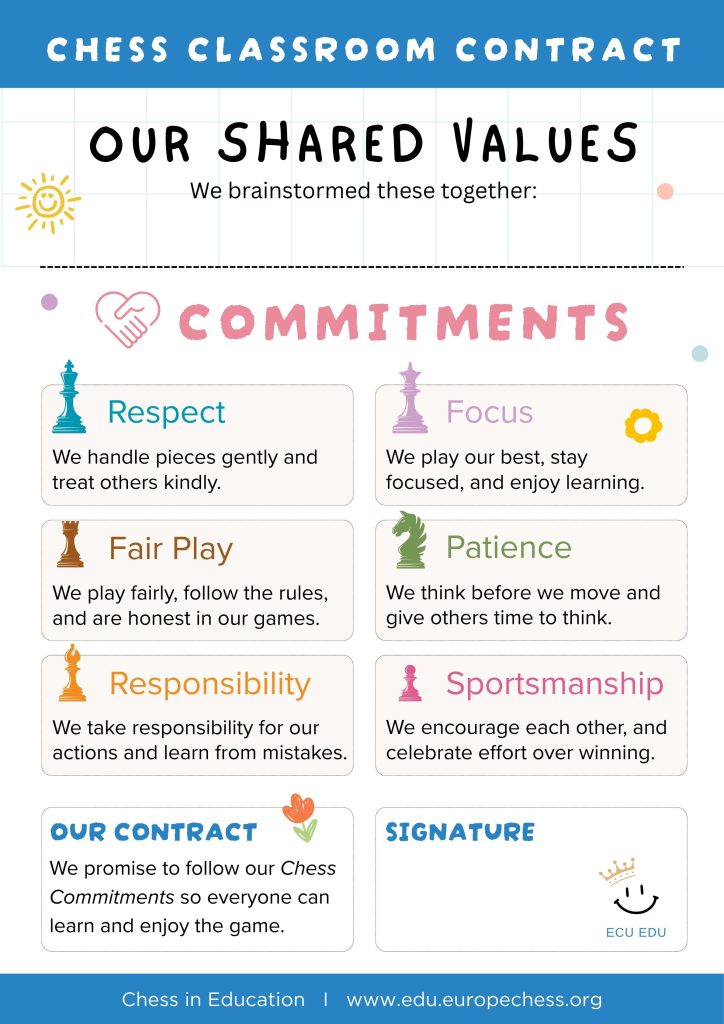
Social, Emotional Learning (SEL)
More ideas on how to create this poster together with the children read here